

New Button
Red Rock Audubon
Dedicated to the environmental stewardship of habitats in the Mojave desert in a time of climate change
MISSION STATEMENT
Red Rock Audubon’s mission is to protect and restore habitats for birds and other wildlife, promote sustainable practices, and engage communities in support of conservation efforts. Through education, advocacy, and outreach, we strive to inspire individuals to act as environmental stewards and to ensure equitable access to nature for all.
Upcoming Events
OUR BLOG
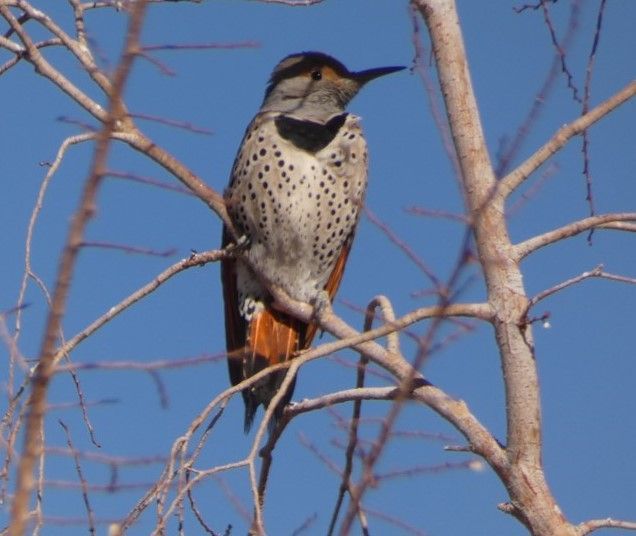
By Alex Harper By November, most of the wintering songbirds have settled into their wintering territories for the winter months. In and around our neighborhoods and small parks, Northern Flickers, Ruby crowned Kinglets, Yellow-rumped Warblers and White-crowned Sparrows have become part of the urban and suburban winter makeup. Brewer’s Blackbirds arrive in force, joining grackles and hanging around parking lots and busy parks. Our Empidonax flycatchers, vireos, most species of wood-warblers, orioles, grosbeaks and tanagers have long-departed for the warmer Sonoran Desert, woodlands in Mexico, or tropical areas of Central and South America. We won’t begin seeing these birds again until March, April, and May. At our wetlands and artificial ponds and lakes, waterfowl diversity and numbers increase through the month. Redheads, Ring-necked Ducks, Buffleheads, and dabbling ducks stream in from waterbodies from the north. One can observe this movement from the bank of Clark County Wetlands Park, where birds follow the Wash as they explore new foraging areas. Parks like Sunset Park and Craig Ranch Park can be great places to observe some of the ducks at close range. At Lake Mead, check 33-Hole for loons and wintering gulls, and Boulder Beach for Greater Scaup and unusual diving ducks like scoters. Scoters feed on mollusks and take advantage of the invasive Quagga Mussel population at some parts of the lake. Geese also wander in the valley. Along with Canada Geese, search for Greater White-fronted Geese and Snow Geese at parks and athletic fields. Small numbers of Ross’s and Cackling Geese mingle at these sites with the larger geese. By the end of the month, it is not unusual for Tundra Swans to make brief visits to our watercourses. At our more well-vegetated parks, keep an eye and ear out for other wintering species. Northern Harriers frequent the bird preserve and the Wash. Hermit Thrushes and Spotted Towhees can be found anywhere with enough understory, though are a bit too shy for most urban parks. Some cultivated plants such as California Fan Palms and Russian Olives begin to produce fruit, which can lure in flickers, robins, waxwings, starlings, mockingbirds and more. Keep an eye out in your neighborhood for such plants. November is a great month for those looking for unusual and infrequent bird species. Corn Creek at Desert National Wildlife Refuge, Floyd Lamb, and any of our large parks can lure in species such as Eastern Phoebe, Pacific Wren, Varied Thrush, Gray Catbird, American Tree Sparrow, Swamp Sparrow, Harris’s Sparrows, Golden-crowned Sparrow, and Lapland Longspur all could show up in the Las Vegas area this November. These are all hardy species that can overwinter in the region and endure the occasional freezes. .
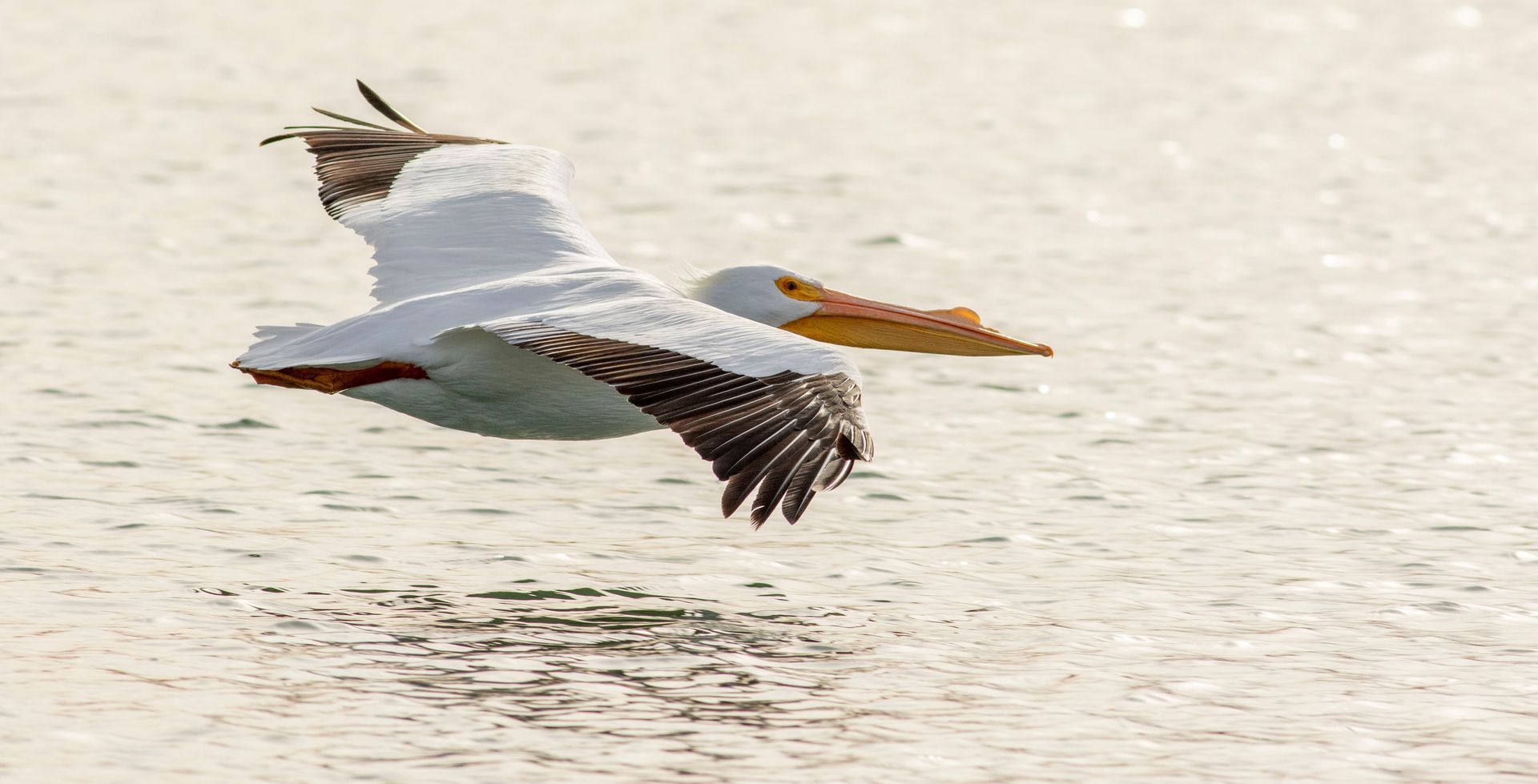
By Alex Harper October is a month of intense change for bird diversity in southern Nevada. The experience that one might have at the very beginning of the month is likely going to be very different from the end. Throughout the month, transiting birds arrive with gradually intensifying cold fronts coming from the north. These colder temperatures begin to suppress insect activity, forcing most insect-eating birds to move to lower latitudes where food is more consistent. Many of our vireos, thrushes, flycatchers, warblers and tanagers will spend their winters anywhere from Mexico to South America. In these locations, they are as equally at home as they are in North America, and there are enough insects and fruit-bearing trees to accommodate the diversity of residential birds and the snowbirds. Like passing waves, each front helps to propel birds to the north into southern Nevada, while moving other birds out to more southerly areas. The assemblage – the totality of birds represented at one location during a snapshot in time – also take on an identity that marks a later stage of songbird migration. These are the more cold-tolerant species of birds that can find food and survive under colder conditions, and many of them signal the approach of winter. Sapsuckers, flickers, Ruby-crowned Kinglets, Yellow-rumped Warblers and White-crowned Sparrows are some of these, and they will become more noticeable throughout southern Nevada’s popular birding sites. Migratory flocks of American Robins may join our resident robins, and Brewer’s Blackbirds begin to appear more and more in all the places we’d expect to see Great-tailed Grackles. Some are passing through to areas farther south, while many others will establish wintering territories in parks and neighborhoods. There is still very little known about how birds establish themselves individually over the landscape in these ways, but this is happening for all of October in southern Nevada. Sparrow diversity changes drastically during this phase of migration. Chipping and Brewer’s Sparrows continue to move out towards grassier areas such as Avi Kwa Ame National Monument, the Sonoran Desert and Mexico. Savannah Sparrows move into weedy areas and even ballfields in suburban parks. Lincoln’s quietly take over stands of invasive Phragmites or wetland edges. Dark-eyed Juncos prefer grassy parks with groves of trees. Look through amassing groups of boisterous White-crowned Sparrows for Golden-crowned and White throated Sparrows. Many sparrows will take advantage of the bounty of seeds that were produced during the closing growing season. At wetlands, transient shorebirds have mostly moved in and out, and waterfowl begin to move in. Southern Nevada hosts about twenty-five species of geese and ducks. Many of them will be arriving from wetlands in the Great Plains, Great Basin, or beyond. Visit the bird preserve or Las Vegas Wash in the morning and watch the numbers of waterfowl moving in and out of the region to appreciate the volume of ducks that move through the Las Vegas Valley. October is a great month for wildcard birding. During October, more irruptive species may be absent or present. Irruptive species are species of birds whose movements are dictated by resources that are less influenced by altitude and are more influenced by other factors. In the Western United States, Red-breasted Nuthatches and most finches tend to be the most irruptive, since their food sources are usually cone-bearing trees. Birds gravitate towards crops of successful trees and avoid areas with less success. This can be problematic if more trees in more regions begin to fail. Witnessing Red Crossbills, Evening Grosbeaks and other montane finches in the Las Vegas is possible in October. Finches are often moving between mountain ranges looking for good pine, fir or spruce crop and drop into lowland parks to drink water. Other wildcards could be wayward eastern songbirds that are out of the range that we expect them in. Warblers are especially prone to showing up, and the classic areas to look for uncommon species are areas that have tall trees, some groundcover (the more, the better) and water. Some popular places to search for many migratory land birds include Corn Creek Field Station, Floyd Lamb Park, the Henderson Bird Viewing Preserve, Clark County Wetlands Park, and Craig Ranch Regional Park. The more you get out with the intention of noticing more, the more chances there are to notice the birds that stand out as different. Get out on the days following cold fronts and observe the changes since the last one. There are insights to glean from those experiences, and they are all useful in your own endeavor to understand the movements of birds around you. .

Carolyn Titus, a longtime pillar of the Las Vegas birding community, passed away this summer. If you've birded here long enough, you're likely to have crossed paths with her or picked up a copy of "Southern Nevada Birds: A Seeker's Guide,” which she wrote and published in 1991. She was an original member of Red Rock Audubon in the 1970s, having served as interim president, vice president, treasurer, education chair, field trip chair and was a longtime field trip leader. She held the long-term record of most Nevada species seen, 440, for many years. Carolyn is seen here on the left, along with Rita Schlageter and Je Anne Blackman. She's remembered by Je Anne, who met her in 1988: “I met Carolyn on my first field trip to Corn Creek. I saw a Gray Catbird. I was told very rudely by the trip leader that it was not what I had seen. Carolyn asked where I saw it, so she went back with me, and we refound the bird. Through the years, we had many birding trips. Carolyn discovered that no one had done a big day for every month in Nevada, so in 2006 we did. Our group of four consisted of Carolyn Titus, Rita Schlagter, Tracy Kipke and Je Anne Branca; needless to say, not only did we have some long days, but tons of fun.” Je Anne later traveled with her to Portland, where they found a lifer Falcated Duck and Emperor Goose. A few years later, they traveled to South Africa and New Mexico, where they saw a Brown-capped Rosy Finch, a lifer for them all. “I will miss Carolyn and all her bird knowledge,” Je Anne said. Carolyn passed away on her birthday, Aug. 16. We send our deepest condolences to Carolyn's loved ones.