Birding as a Pathway to Healing for University Trauma Survivors
By Skyler Peterson
Universities should embrace mindful birding as a form of ecotherapy to support students living with PTSD.
Post-traumatic stress disorder (PTSD) is an increasingly urgent mental health issue for college students. Traumatic events such as campus shootings, sexual assault, racial violence, and natural disasters leave lasting effects. A recent study found that the prevalence of PTSD in college students rose from 3.4% in 2017–2018 to 7.5% in 2021–2022 (Zhai, 2024). This increase demands attention from universities and the broader public.
How PTSD Affects Students
PTSD impacts nearly every aspect of a student’s life. It impairs academic performance and increases the risk of substance use. Many students withdraw socially, unable to engage fully with their peers or professors. For those who experience trauma on campus, the sense of safety and belonging, essential to learning, may be shattered. The place they must go to succeed becomes filled with constant triggers they must struggle to navigate.
Mindful Birding as Ecotherapy
One promising tool for promoting healing is ecotherapy: structured, nature-based activities that restore mental and physical well-being. A growing practice within this field is mindful birding, also known as “slow birding.” It combines birdwatching with mindfulness to help individuals ground themselves in the present moment and connect with the natural world around them. The guiding principles are simple but powerful: awareness of being in the moment with birds, intention to turn attention to birds and nature for self-care, being without judgment to allow an experience to be what it will, and an exploration of curiosity in openness to experiencing awe. According to the Mindful Birding Network, this intentional focus on nature can foster resilience, reduce stress, and nurture a sense of belonging in the world.
Connecting Birding to PTSD
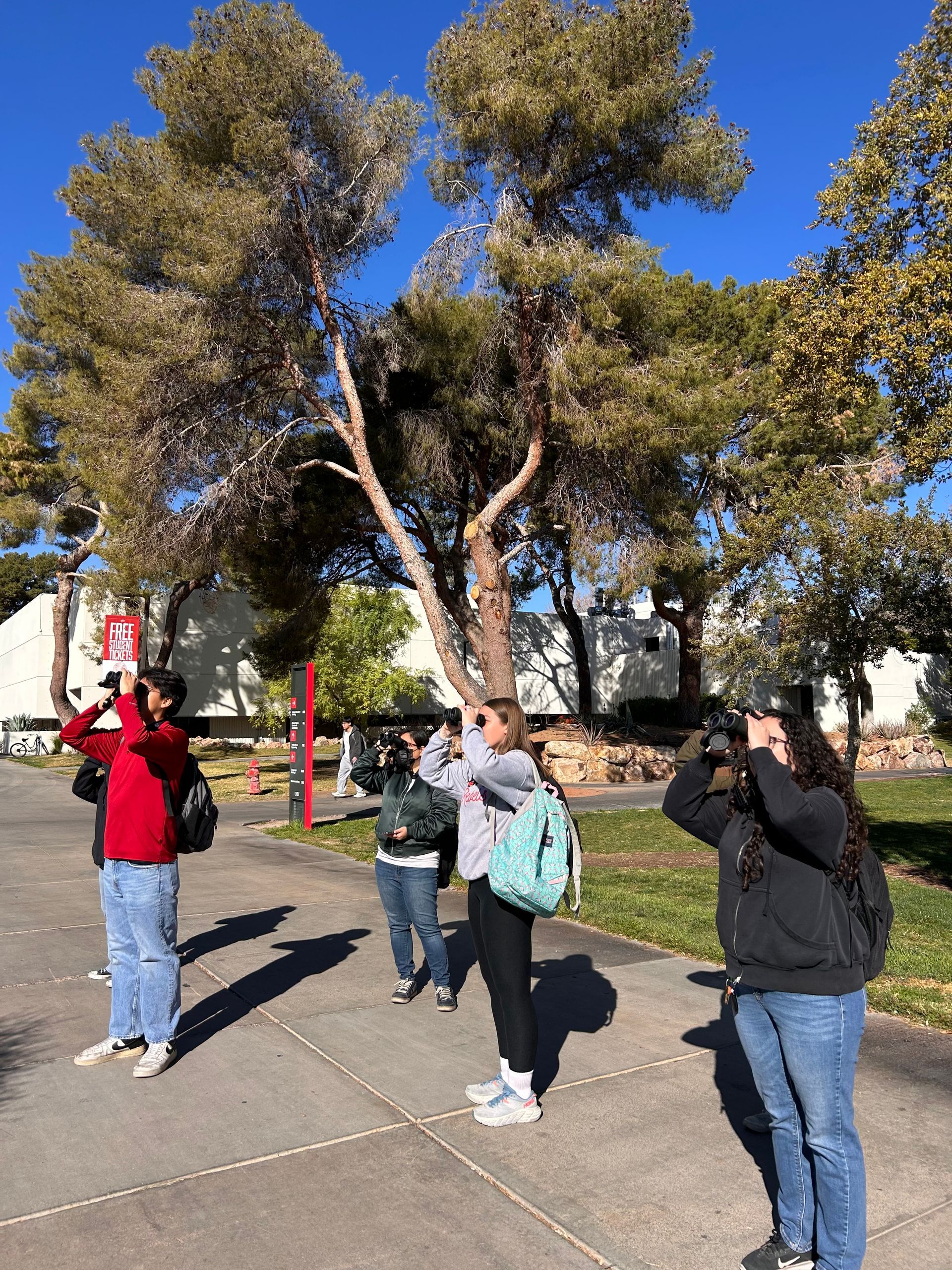
For students coping with PTSD, mindful birding offers a grounding practice that is both accessible and flexible. It requires no prior experience and can be done anywhere, even while walking to class. A student feeling dysregulated might pause to listen to birdsong, notice the flight of a sparrow, or observe the seasonal rhythms on campus. These moments provide a break from intrusive thoughts, reconnecting the student with body, mind, and surroundings. This connection to nature can create a sense of safety and predictability, something many survivors of trauma desperately need. The cyclical patterns of bird life remind us that the world continues in order, even amid personal chaos.
Measurable Examples
During the COVID-19 pandemic, researchers at the University of North Carolina, Greensboro found that combining mindfulness with time in nature significantly reduced anxiety symptoms in students (Vitagliano, 2023). This serves as a vital lesson for higher education, where counseling centers are stretched beyond capacity. While campus green spaces are therapeutic as they boost students' physical, mental, and social well-being, not all campuses can afford to expand green infrastructure. Birding, however, is free. It can be practiced anywhere, costs nothing, and helps students connect with nature in a restorative way. Programs like Audubon on Campus demonstrate that mindful birding is not only feasible but also practical and appealing for budget-conscious administrators.
A qualitative analysis on the impact of ecotherapeutic mental health interventions on stress reduction and mental well-being was conducted. All ecotherapeutic methods (nature-based mindfulness, forest therapy, and therapeutic ornithology) were found to improve general well-being at various levels and dimensions. These levels include sensory, emotional, cognitive, language, and emotional state. Participants of the study reported increased feelings of relaxation, release of tension, increased awareness, and aroused curiosity. (Simonienko, 2023)
How Universities Can Act
Universities are well-positioned to make mindful birding more accessible. Audubon on Campus, the collegiate branch of the National Audubon Society, already hosts birding events throughout the academic year. By partnering with campus mental health services and victim advocate programs, these initiatives could expand into intentional ecotherapy opportunities for students living with PTSD. Providing mindful birding workshops, guided walks, or even simple campus maps highlighting bird-rich areas could help students build grounding practices into their daily lives. The cost is minimal, but the potential benefits of greater resilience, stronger community connections, and improved well-being are immense.
A Call to Listen
As the prevalence of PTSD rises, universities must look beyond conventional therapies and consider innovative, accessible options for healing. Mindful birding is not a cure, but it is a powerful tool to help survivors reconnect with themselves, their peers, and their campuses. Birds are everywhere, singing and flying, reminding us of the continuity and resilience of life. By encouraging students to listen, notice, and engage, universities can give trauma survivors not just a coping strategy, but a pathway back to healing.
Zhai, Yusen, and Xue Du. “Trends in Diagnosed Posttraumatic Stress Disorder and Acute Stress Disorder in US College Students, 2017-2022.” JAMA Network Open 7, no. 5 (May 30, 2024). https://doi.org/10.1001/jamanetworkopen.2024.13874.
“Mindful Birding.” The Mindful Birding Network. Accessed August 29, 2025. https://www.themindfincludeulbirdingnetwork.com/mindful-birding.
Vitagliano, L. A., Wester, K. L., Jones, C. T., Wyrick, D. L., & Vermeesch, A. L. (2023). Group Nature-Based Mindfulness Interventions: Nature-Based Mindfulness Training for College Students with Anxiety. International Journal of Environmental Research and Public Health, 20(2), 1451. https://doi.org/10.3390/ijerph2002145
Simonienko, Katarzyna, Sławomir Murawiec, and Piotr Tryjanowski. “The Impact of Ecotherapeutic Mental Health Interventions (Forest Therapy, Therapeutic Ornithology, and Nature-Based Mindfulness) on Stress Reduction and Mental Wellbeing: A Qualitative Analysis.” Psychiatria i Psychologia Kliniczna 23, no. 4 (December 29, 2023): 324–31. https://doi.org/10.15557/pipk.2023.0040.
Skyler Peterson is now the AmeriCorps Service Member for Red Rock Audubon. This story was written prior to her employment with the organization.
RECENT ARTICLES