Birding at Primm: An Interstate Oasis for MIgrants and Birders
Author name

When the days grow shorter, the nights cooler, and winds begin to turn south, many birds begin to change their behaviors. The breeding season has come and gone. Some species spend their lives close to home, perfectly adapted to their habitats through all seasons. But for most North American songbirds, migration is a necessary annual act of survival in the seasonal pursuit of food, water, and safety. These include flycatchers, vireos, thrushes, sparrows, blackbirds, warblers, tanagers, grosbeaks, and buntings. As insects vanish and leaves fall across northern regions, many birds push south, traversing mountains, valleys, and deserts in search of suitable habitat. Many of these birds are intending to make their way to the warmer climates of Mexico and more tropical areas for the colder months.


In the arid expanse of the Mojave Desert, safe stopover sites are few and far between. Migrants that are not desert specialists often must locate oases, which are small pockets of water, shade, and food, to rest and refuel. Some are natural: mountain springs and creeks, valley wetlands, or canyons. Others are entirely human-made: parks, cemeteries, and towns where irrigation and ornamental trees create relatively lush islands in a sea of desert. These green patches, although artificial, can mean the difference between exhaustion and success for a traveling flycatcher or warbler.


One such refuge sits right on the California-Nevada border along I-15. This is the “town” of Primm. To most travelers between Los Angeles and Las Vegas, it’s another brief stop for gas and food. A defunct roller coaster and closed shopping outlet give the impression that Primm’s prime is behind us. But for birders, it’s a birding hotspot. Primm’s irrigated lawns and runoff from water sources draw birds from miles around. Its small size makes it easy to cover, and its isolation makes it stand out. It’s an island of green surrounded by dry lake beds and sparse vegetation.


Primm is a classic “migrant trap,” where the color green and promise of water concentrates birds in one small place. Though songbirds navigate with remarkable precision by reading the stars, reading the Earth’s magnetic fields, and using landmarks - they do sometimes go astray. Young or disoriented individuals may travel the right distance but in the wrong direction, bringing eastern or Great Plains birds into western deserts. For birders, these navigational errors are the source of exciting discoveries, especially in the Fall.


When one rare bird is found, more often follow. This is the “Patagonia Picnic Table Effect,” named after a famous site in Patagonia, Arizona, where a single unusual sighting decades ago triggered a rush of birders who went on to discover even more rarities. Primm functions much the same way: one exciting report draws others to look, and the increased attention yields more discoveries. The town’s lawns and patches of trees may not be appealing, but birders affectionately call it the “Primm Forest Preserve,” a tongue-in-cheek tribute made by biologists working in the region in the mid-2010s.


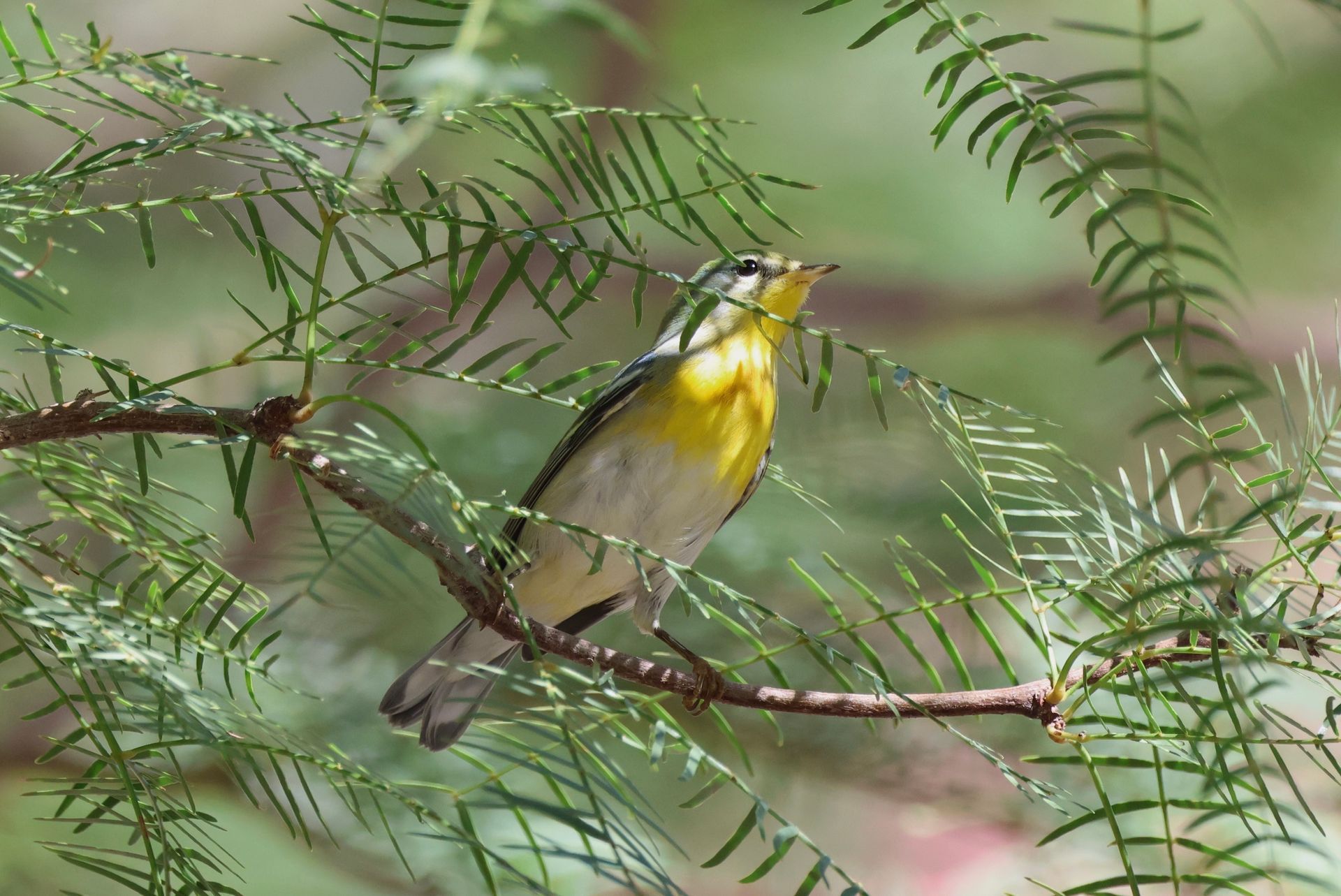
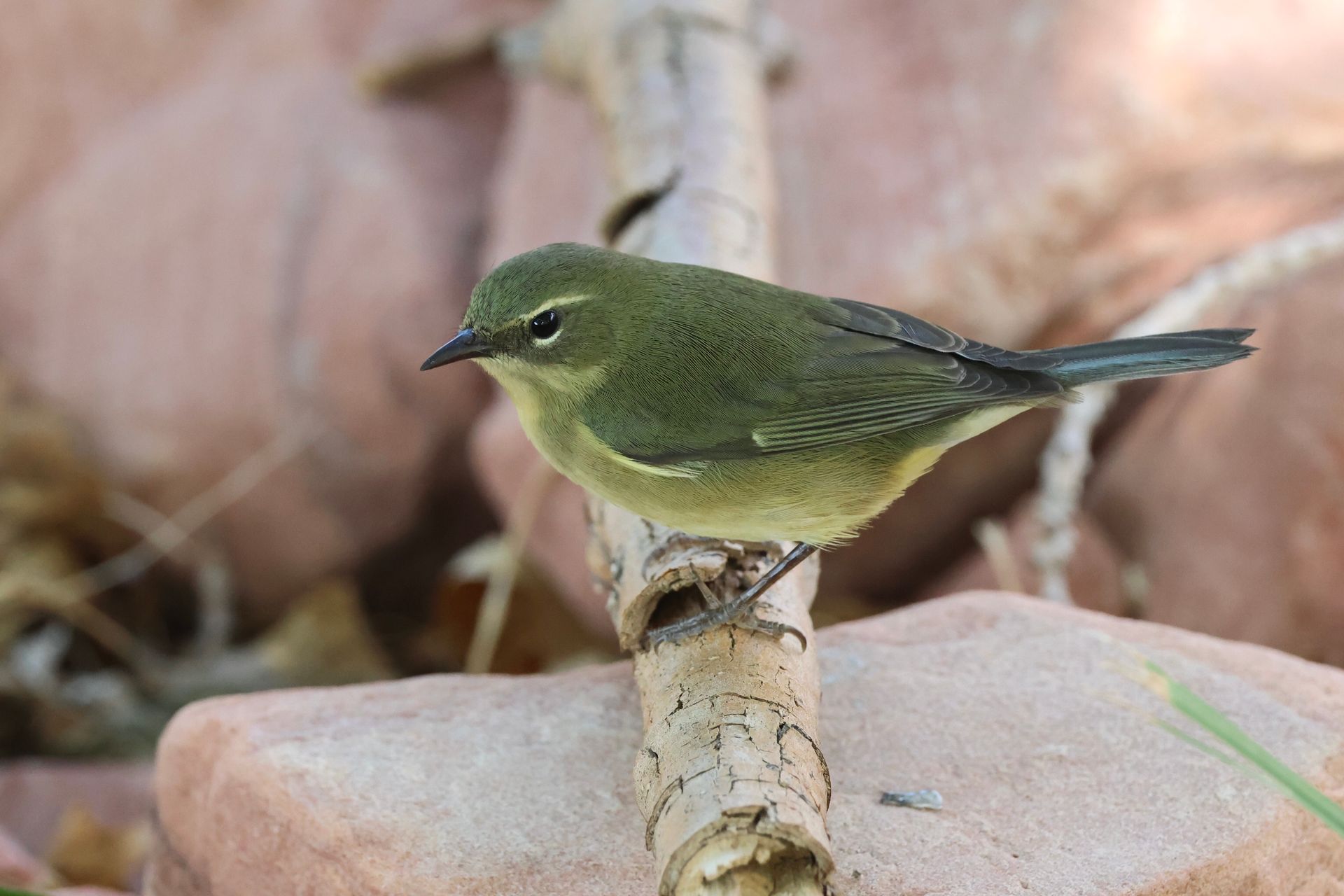
The Fall of 2025 was especially exciting, with Baltimore Oriole, multiple Painted Buntings, a Blackburnian Warbler, Yellow-throated Warbler, and more showing up in a short amount of time. As birder and biologist Michael McCloy shared, “This oasis contains some of the only real trees and water for miles, acting as a magnet for any migrating songbirds in need of rest and refueling.” During his near-daily visits this September, he witnessed moments of pure wonder: “One day I turned around and there was a Lark Bunting and a Dickcissel at the same roadside puddle. Another day, a Marsh Wren perched twenty feet up in a tree. And when a Black-throated Blue Warbler showed up, it came within three feet of me. I wondered if it was going to land on my arm.”


For Clayton Peoples, who visits regularly from Reno, Primm has become a staple of southern Nevada birding. “It’s one of my go-to places,” he said. “I used to stay at Buffalo Bill’s just to be right there at sunrise.” Clayton recalls finding a Nelson’s Sparrow with Dave Anderson, a Dickcissel while searching for a Painted Bunting, and most recently a hatch-year female Black-throated Blue Warbler. Many of these birds are considered “review list” for Nevada. He shares updates through the WhatsApp groups and Facebook, helping others join in on sharing are bird sightings. For birders from across the state, Primm has become an unlikely meeting ground for the birding community.


On a population scale, migrant traps like Primm may seem insignificant. But for individual birds, these patches of green can mean survival - a brief chance to rest, feed, and rebuild strength before continuing south. Every visit is a gamble with the possibility of reward, especially in April-early June and August to late October when most songbirds are migrating. Whether you’re in Primm, Corn Creek, Indian Springs, or a patch of trees in your neighborhood park, have a look and be open to the idea of finding something you wouldn’t expect. You never know what might drop in.


RECENT ARTICLES
January 30, 2026
By Skyler Peterson Universities should embrace mindful birding as a form of ecotherapy to support students living with PTSD. Post-traumatic stress disorder (PTSD) is an increasingly urgent mental health issue for college students. Traumatic events such as campus shootings, sexual assault, racial violence, and natural disasters leave lasting effects. A recent study found that the prevalence of PTSD in college students rose from 3.4% in 2017–2018 to 7.5% in 2021–2022 (Zhai, 2024). This increase demands attention from universities and the broader public. How PTSD Affects Students PTSD impacts nearly every aspect of a student’s life. It impairs academic performance and increases the risk of substance use. Many students withdraw socially, unable to engage fully with their peers or professors. For those who experience trauma on campus, the sense of safety and belonging, essential to learning, may be shattered. The place they must go to succeed becomes filled with constant triggers they must struggle to navigate. Mindful Birding as Ecotherapy One promising tool for promoting healing is ecotherapy: structured, nature-based activities that restore mental and physical well-being. A growing practice within this field is mindful birding, also known as “slow birding.” It combines birdwatching with mindfulness to help individuals ground themselves in the present moment and connect with the natural world around them. The guiding principles are simple but powerful: awareness of being in the moment with birds, intention to turn attention to birds and nature for self-care, being without judgment to allow an experience to be what it will, and an exploration of curiosity in openness to experiencing awe. According to the Mindful Birding Network, this intentional focus on nature can foster resilience, reduce stress, and nurture a sense of belonging in the world. Connecting Birding to PTSD For students coping with PTSD, mindful birding offers a grounding practice that is both accessible and flexible. It requires no prior experience and can be done anywhere, even while walking to class. A student feeling dysregulated might pause to listen to birdsong, notice the flight of a sparrow, or observe the seasonal rhythms on campus. These moments provide a break from intrusive thoughts, reconnecting the student with body, mind, and surroundings. This connection to nature can create a sense of safety and predictability, something many survivors of trauma desperately need. The cyclical patterns of bird life remind us that the world continues in order, even amid personal chaos. Measurable Examples During the COVID-19 pandemic, researchers at the University of North Carolina, Greensboro found that combining mindfulness with time in nature significantly reduced anxiety symptoms in students (Vitagliano, 2023). This serves as a vital lesson for higher education, where counseling centers are stretched beyond capacity. While campus green spaces are therapeutic as they boost students' physical, mental, and social well-being, not all campuses can afford to expand green infrastructure. Birding, however, is free. It can be practiced anywhere, costs nothing, and helps students connect with nature in a restorative way. Programs like Audubon on Campus demonstrate that mindful birding is not only feasible but also practical and appealing for budget-conscious administrators. A qualitative analysis on the impact of ecotherapeutic mental health interventions on stress reduction and mental well-being was conducted. All ecotherapeutic methods (nature-based mindfulness, forest therapy, and therapeutic ornithology) were found to improve general well-being at various levels and dimensions. These levels include sensory, emotional, cognitive, language, and emotional state. Participants of the study reported increased feelings of relaxation, release of tension, increased awareness, and aroused curiosity. (Simonienko, 2023) How Universities Can Act Universities are well-positioned to make mindful birding more accessible. Audubon on Campus, the collegiate branch of the National Audubon Society, already hosts birding events throughout the academic year. By partnering with campus mental health services and victim advocate programs, these initiatives could expand into intentional ecotherapy opportunities for students living with PTSD. Providing mindful birding workshops, guided walks, or even simple campus maps highlighting bird-rich areas could help students build grounding practices into their daily lives. The cost is minimal, but the potential benefits of greater resilience, stronger community connections, and improved well-being are immense. A Call to Listen As the prevalence of PTSD rises, universities must look beyond conventional therapies and consider innovative, accessible options for healing. Mindful birding is not a cure, but it is a powerful tool to help survivors reconnect with themselves, their peers, and their campuses. Birds are everywhere, singing and flying, reminding us of the continuity and resilience of life. By encouraging students to listen, notice, and engage, universities can give trauma survivors not just a coping strategy, but a pathway back to healing. Zhai, Yusen, and Xue Du. “Trends in Diagnosed Posttraumatic Stress Disorder and Acute Stress Disorder in US College Students, 2017-2022.” JAMA Network Open 7, no. 5 (May 30, 2024). https://doi.org/10.1001/jamanetworkopen.2024.13874. “Mindful Birding.” The Mindful Birding Network. Accessed August 29, 2025. https://www.themindfincludeulbirdingnetwork.com/mindful-birding . Vitagliano, L. A., Wester, K. L., Jones, C. T., Wyrick, D. L., & Vermeesch, A. L. (2023). Group Nature-Based Mindfulness Interventions: Nature-Based Mindfulness Training for College Students with Anxiety. International Journal of Environmental Research and Public Health, 20(2), 1451. https://doi.org/10.3390/ijerph2002145 Simonienko, Katarzyna, Sławomir Murawiec, and Piotr Tryjanowski. “The Impact of Ecotherapeutic Mental Health Interventions (Forest Therapy, Therapeutic Ornithology, and Nature-Based Mindfulness) on Stress Reduction and Mental Wellbeing: A Qualitative Analysis.” Psychiatria i Psychologia Kliniczna 23, no. 4 (December 29, 2023): 324–31. https://doi.org/10.15557/pipk.2023.0040. Skyler Peterson is now the AmeriCorps Service Member for Red Rock Audubon. This story was written prior to her employment with the organization.
January 25, 2026
By Alex Harper Neither in the depths of winter anymore and too early for the rush of spring, February is a month that may feel more stagnant than January or March. The increasing daylight triggers hormone production that may prepare some birds for breeding or migratory behavior. The behavior changes in birds may be obvious when observing some species, but not observable in others. There are indeed some birds on the move in February, and they are the harbingers of an incoming spring. For our local breeding birds, many will be engaging in territorial behavior or “tuning up” their songs. Residential birds at low elevations, such as in the Las Vegas area, will be most obvious. You’ll notice doves, hummingbirds and mockingbirds chasing each other around or displaying. You may even catch hummingbirds in the act of collecting nest materials; spider webs are amongst some of their favorite materials. The songs of House Finches may be heard on almost every city block in town. At local parks such as Sunset Park, the Henderson Bird Viewing Preserve, and Pittman Wash, you may hear the harsh song of the Black-tailed Gnatcatcher, a rambling Crissal Thrasher, or the hurried and stuttering song of the Abert’s Towhee. Since these resident birds are nonmigratory and are already in the area that they will attempt to breed, they can begin breeding activities now. For many of the migratory species, they are on a different schedule. At our parks with water and our reservoirs, we could still see influxes of winter-driven waterfowl, especially in diving ducks like goldeneyes, Red-breasted and Common Mergansers. Cooler temperatures to the north or farther inland can freeze ponds over, which directly affects the ability for waterfowl to forage for food. Diving waterfowl are impacted by any freezes, and they’ll move around throughout February when necessary. February is another great gull-watching month. Virtually any species can show up at Lake Mead during February. Some migratory birds are on the way from south of the border. Fast-flying swallows are amongst the first to arrive, and they’ll trickle into wetlands such as Clark County Wetlands Park and the Henderson Bird Viewing Preserve. Migratory Northern Rough-winged Swallows will join the small winter flocks at the bird preserve, as will Tree Swallows, followed by a few Barns and Violet-greens. Visit the Henderson Bird Viewing Preserve towards the end of February, and you’ll notice the slow accumulation of swallows. Once the trees begin to produce new leaves again, insect and bird activity will escalate. From March to May, surges of spring-related activities such as singing, nest-building, and migration will be in full motion.
December 27, 2025
by Alex Harper Cold, dense air blankets the valleys and basins of the lowlands, and snow may cover mountain slopes. The sun arcs low across the horizon, and the days are especially short. Just about all the deciduous trees have lost their leaves after a few windy December days. The loss of leaf cover forces some songbirds to forage lower to the ground or move around locally to find fuel and cover. Since insects may only be active during the warmest parts of the warmest of January days, you may notice Ruby-crowned Kinglets and Yellow-rumped Warblers using ingenuity to find dormant or dead insects and spiders. In lots and natural areas, White-crowned Sparrows and House Finches feed on seeding quailbush. Many January days can be bone-chilling, but on calm and warmer days, signs of breeding activities will be noticeable in urban areas. You may hear the loud popping sounds of displaying Anna’s Hummingbirds, see Eurasian Collared-Doves “paragliding” between powerlines, or notice robins and mockingbirds tuning up their songs. This is in response to the gradual increase in daylight following the winter solstice in December; birds are so attuned to light that some resident species may get a jumpstart on establishing territories and attracting mates. Wetlands, parks with water, and golf courses can host high species of duck diversity. Along the Las Vegas Wash from the upper wash to Lake Las Vegas, open water attracts teals, Mallards, American Wigeons, pintails, Gadwalls, Ring-necked Ducks, and Lesser Scaups. Wigeons and Gadwalls are especially drawn to weirs, where they feed on algae growing on rocks. Northern Shovelers may be absent along the Wash, preferring the calmer waters of the Henderson Bird Viewing Preserve. American Wigeons, Ring-necked Ducks, and Redheads all may be found at city park ponds and lakes, where they have learned to take handouts. Geese move in between nighttime roosts around water for open grassy areas during the day. Geese are grazers, and you may see small groups of Snow Geese and the odd Cackling, Greater White-fronted, or Ross’s Geese among Canada Geese on soccer fields or golf course lawns. Lake Mead can attract grebes, loons, and diving ducks. Check the areas where the Las Vegas Wash meets the lake, which is currently near Government Wash and 33-Hole. Large enough fish for grebes, loons, and cormorants are attracted to this outwash, and it can be an excellent place to look for these and other waterbirds that eat medium-sized to large fish. Lake Mead is also attractive to gulls in January and late winter. Gulls are dynamic, intelligent, can be difficult to identify to a species-level, and are prone to wandering. For these reasons and more, birders often find looking for gulls an exciting challenge. Only a few species are expected on any given visit to Lake Mead, but the reservoir lures in just about any North American gull species. Gulls go where they are fed, and they roost in safe areas close to consistent feeding areas. 33-Hole, Government Wash, Boulder Beach and Hemenway Harbor are all tried-and-true locations to look for gulls. Scan through flocks of ubiquitous Ring-billed, California, and occasional Herring for Lesser Black-backed and Iceland Gulls. Eventually, you may see something completely unexpected. Overall, January can be used to see waterfowl move and court one another, as well as life cycles of wintering and resident birds. For some bird species, they are weeks or months away from migrating to their breeding grounds, which in some cases may be in Canada or Alaska. For our year-round neighborhood birds, they may be transitioning out of their winter behavior of wandering for food and beginning to set up territory. By February, we will welcome the vanguards of returning swallows.